๐ A Foundational Guide for Educational Leaders and Teacher Trainers
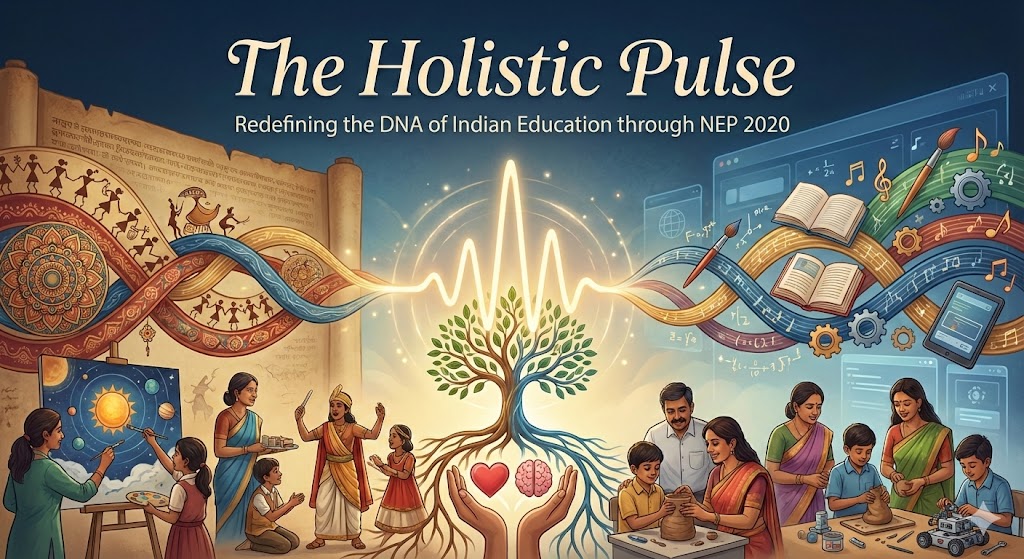
The National Education Policy (NEP) 2020 marks a transformative era in Indian education, demanding a decisive shift from rote learning to experiential and holistic education. Central to this vision is the widespread integration of arts and culture into the curriculum through Art Integrated Learning (AIL).
This shift presents educational leadership with a dual challenge: ensuring teachers are not just familiar with the new content, but are cognitively and emotionally equipped to deliver this complex, integrated pedagogy successfully.
The Vision of NEP 2020 and Art Integrated Learning
Why is AIL such a vital link in the NEP 2020 mission, and what benefits will future generations reap if teachers master this approach?
1. Beyond the Textbook: The Need for AIL
NEP 2020 mandates AIL as a cross-curricular pedagogical approach that utilizes various art forms and culture as the basis for learning concepts across traditional subjects.1
- Creating Joyful Classrooms: The most immediate goal of AIL is to embed the approach in classroom transactions for creating “joyful classrooms”.2 When learning is fun and experiential, it naturally reduces student anxiety and increases engagement.
- Developing 21st-Century Skills: AIL is the primary mechanism for cultivating creativity and innovation.3 The artistic process compels children to think creatively and utilize problem-solving skills, which are essential for success in future workplaces increasingly dominated by automation and data.2
- Holistic Growth: AIL is explicitly designed to develop the target areas of the learner’s cognitive, socio-emotional, and psychomotor domains.4 It ensures education supports the “entire growth” of the child, fulfilling the national goal of maximizing human potential.2
- Imbibing the Indian Ethos: The policy strongly emphasizes strengthening the link between education and culture by “imbibing the Indian ethos through integration of Indian art and culture” at every level.1 AIL is the vehicle for transmitting these core cultural values and narratives.
2. The Teacherโs Challenge: A New Cognitive Demand
For AIL to succeed, teachers must pivot from being knowledge imparters to strategic facilitators. This requires two enhanced internal capacities:
- Foundational Awareness (Self-Regulation): Teachers need to manage their own stress and emotional regulation to create a calm, joyful environment. They must be able to recognize and foster socio-emotional skills in students.3
- Analytical Skills (Strategic Planning): AIL demands complex planningโteachers must break down complex content into manageable art activities, anticipate student struggles, and offer multiple, varied avenues to learning (Differentiated Instruction).5
Part II: Integrating Ancient Wisdom with Modern Pedagogy

The solution to equipping teachers with these high-level cognitive skills lies not in new technology, but in reclaiming the cultural wisdom of the Panchatantra.
1. The Panchatantra: A Historical Precedent for AIL
The Panchatantra was not created for passive reading; it was written by Vishnu Sharma as a targeted educational intervention to teach nฤซti (pragmatic, strategic wisdom) to dull-headed princes.
- Learning through Allegory: The fables employ animal characters as archetypes, creating a safe, non-threatening distance for learners to analyze complex issues like betrayal, leadership, and conflict.6 This allegorical method is a profound form of experiential learningโthe very core of AIL.
- Strategic Thinking Engine: The stories function as “ethical simulations”. Narratives like The Lion and the Clever Rabbit compel the learner to analyze a crisis and plot a strategy, directly fostering Analytical Skills like problem identification and logical reasoning.
By having teachers utilize these narratives, they are not just teaching culture; they are unlocking the strategic, cognitive core that the stories were designed to impart.
2. The Scientific Edge: Narrative Art Therapy
To transition these philosophical concepts into measurable, reliable skills, we employ Narrative Art Therapyโa scientifically validated methodology.7
- Scientific Validation: Art therapy is recognized for promoting emotional release and cognitive reconstruction.7 The use of metaphors and sequential image-making is proven to help adults process concepts they might otherwise resist, leading to genuine, measurable insight.8
- Measurable Skills: The expressive nature of the activitiesโsuch as creating visual containers or storyboarding solutionsโprovides objective evidence of a teacher’s shift in strategic thinking and self-awareness, allowing us to scientifically track their progress.
Conclusion: A Call to Elevate Teacher Training
The vision of NEP 2020 depends entirely on the teacher’s capacity to facilitate holistic learning. Our integrated approach provides a powerful, culturally resonant mechanism for building that capacity, moving beyond theoretical guidance to tangible, skill-based growth.
If you are an authority or organization dedicated to providing teachers with high-impact, evidence-based professional development that meets the holistic demands of NEP 2020, we invite you to explore our advanced program.