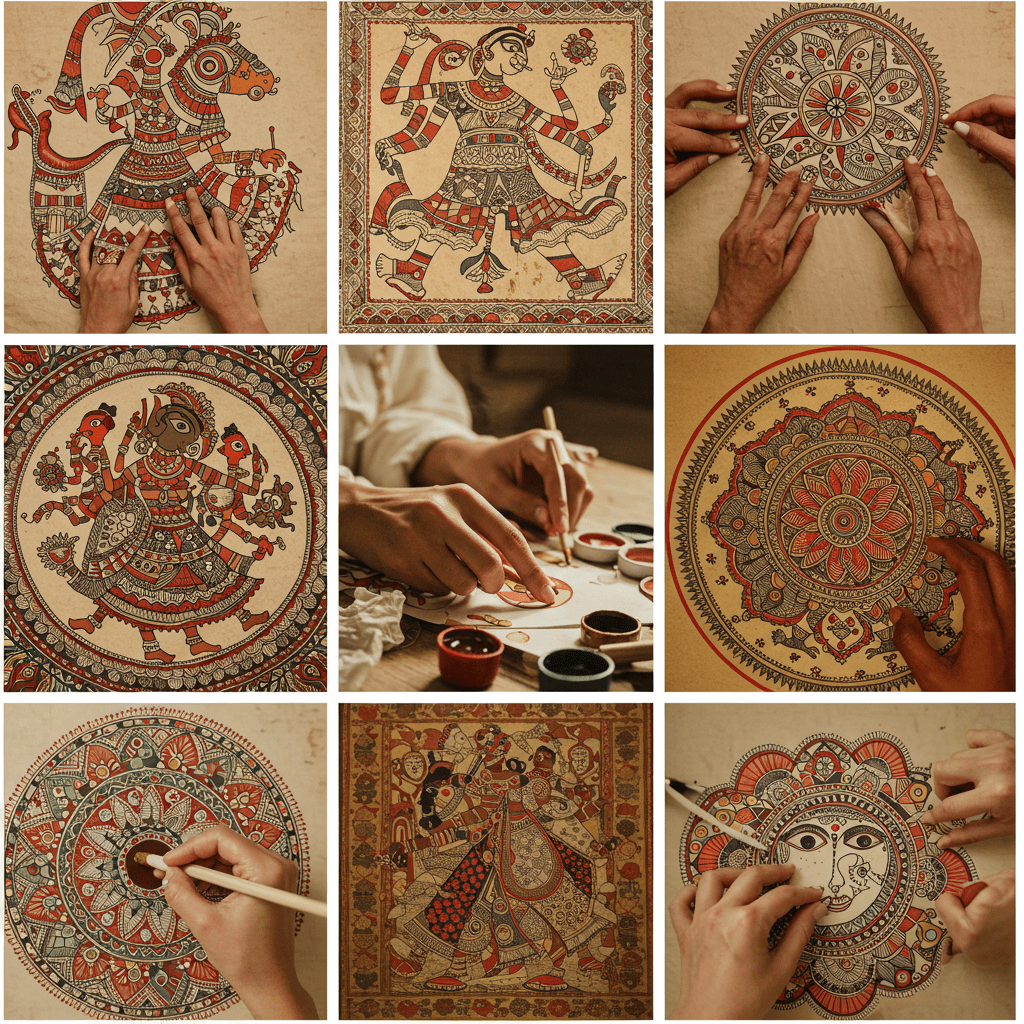
Have you ever found yourself lost in a creative activity, feeling a sense of calm wash over you? This isn’t just a pleasant pastime; it’s a profound connection to something deeply human. For centuries, across diverse cultures, art has been more than just decoration or a commodity. It has been a fundamental part of life, a language for expression, and, crucially, a silent partner in mental well-being.
In India, a vibrant tapestry of folk art traditions exists, each with its unique story, style, and spirit. These art forms range from the rhythmic simplicity of Warli to the intricate narratives of Kalamkari. They were not born in commercial galleries. Instead, they emerged from the very fabric of community life. They embodied a process. They were a ritual. They were a way of being. The art was deeply intertwined with the daily rhythms, spiritual beliefs, and collective consciousness of the people who created them.
Art as a Process of Life, Not a Product to Sell
Imagine a time when art wasn’t a luxury item, but a necessity. For the indigenous communities who originated these folk arts, creating was as natural as breathing. The walls of their homes became canvases. The earth and plants provided their pigments. The stories of their lives, their reverence for nature, and their spiritual beliefs became their masterpieces.
These art forms were often rudimentary and native in nature. Every person in the community practiced them. Women painted auspicious symbols for weddings. Men depicted hunting scenes. Families celebrated harvests through visual narratives. The act of creation was communal, meditative, and inherently therapeutic. It fostered mindfulness, provided an outlet for emotional expression, strengthened community bonds, and helped individuals process their experiences. It was a form of mental health care long before the term existed. It was a way to keep balance and harmony within oneself and the community.
From Sacred Ritual to Global Recognition
Over time, the sheer beauty, unique aesthetics, and profound cultural depth of these folk arts began to gain wider recognition. The psychological and scientific benefits on mental well-being became more evident. The calming effect of repetitive patterns, the grounding power of natural colors, and the joy of self-expression were highlighted. They transcended their original, localized contexts. Artists began to adapt them for broader audiences. What was once a community ritual gradually found its way into commercial spaces. It became more widespread and appreciated globally.
This commercialization has brought these incredible traditions to the forefront. However, it has also sometimes shifted the focus from the process of creation to the final product.
Reconnecting with the Therapeutic Heart of Folk Art
At Indian Nonclinical Art Therapy, we believe in reclaiming the original essence of these art forms. Our approach is unique. We learn these traditional techniques without primarily aiming to create a final product for sale. Our profound intention is to engage in art as a powerful tool for mental well-being.
We delve into the skills and techniques. Yes, we focus on the connection you forge with the art form. It’s about the mindful strokes, the meditative patterns, the self-discovery that unfolds as you create. We explore how these ancient traditions can be transformed into contemporary articles. This transformation allows you to integrate the beauty of folk art into your everyday active life. You benefit from its therapeutic advantages far beyond just a canvas on a wall.
Join us as we explore the therapeutic potential embedded in each of these captivating traditions:
Warli: The Rhythm of Life

Discover how the simple geometric forms of Warli art are rooted in daily life and nature. They offer a grounding and meditative practice. This practice connects you to the earth and community.
Madhubani: The Language of Vibrancy

Explore the intricate details and vibrant colors of Madhubani. This storytelling art form is traditionally created by women. Learn how its meticulous process can foster focus and emotional expression.
Gond: The Soul of the Forest

Explore the mesmerizing dot and line patterns of Gond art. This tradition is deeply connected to nature and folklore. It offers a rhythmic and grounding creative experience.
Pichwai: The Canvas of Devotion
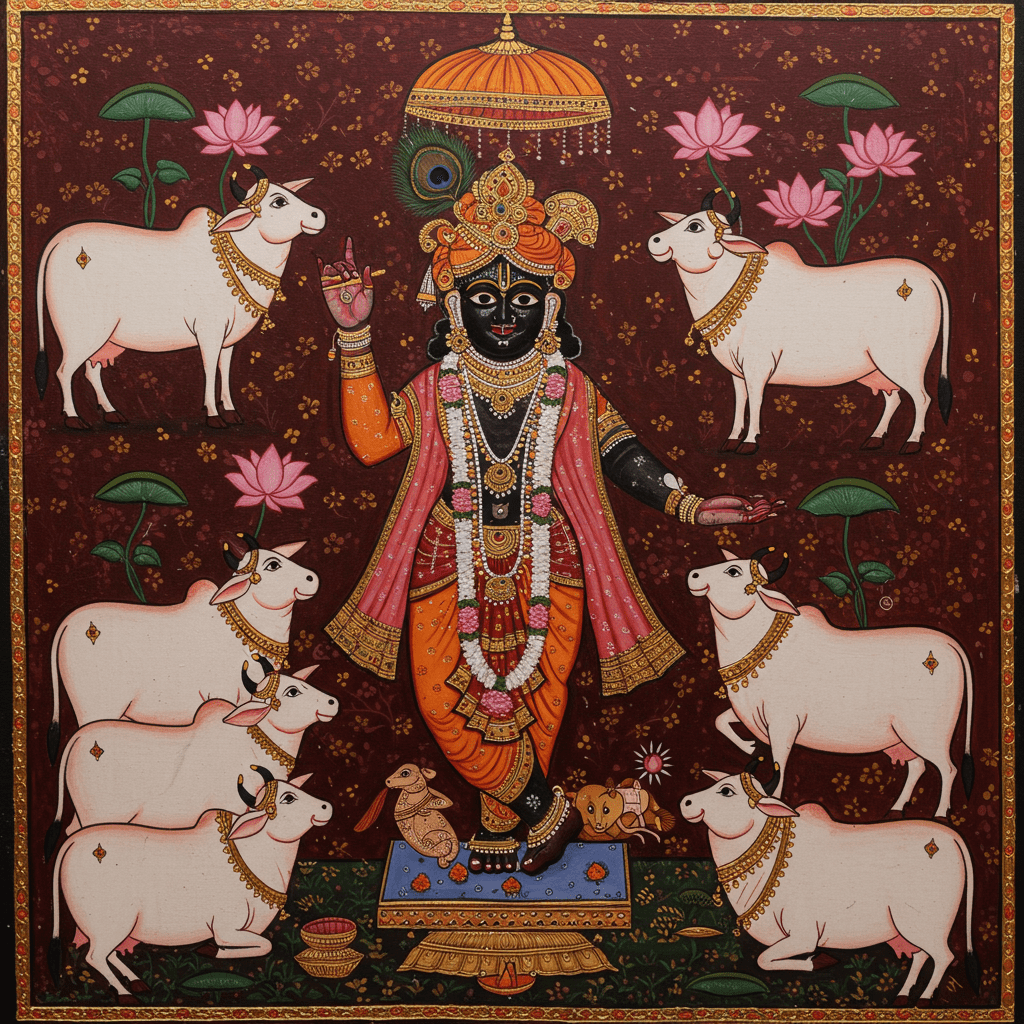
Uncover the spiritual depth and intricate beauty of Pichwai. This is an art form dedicated to Lord Krishna. Learn how its devotional themes can inspire peace and introspection.
Kalamkari: The Pen’s Poetic Dance
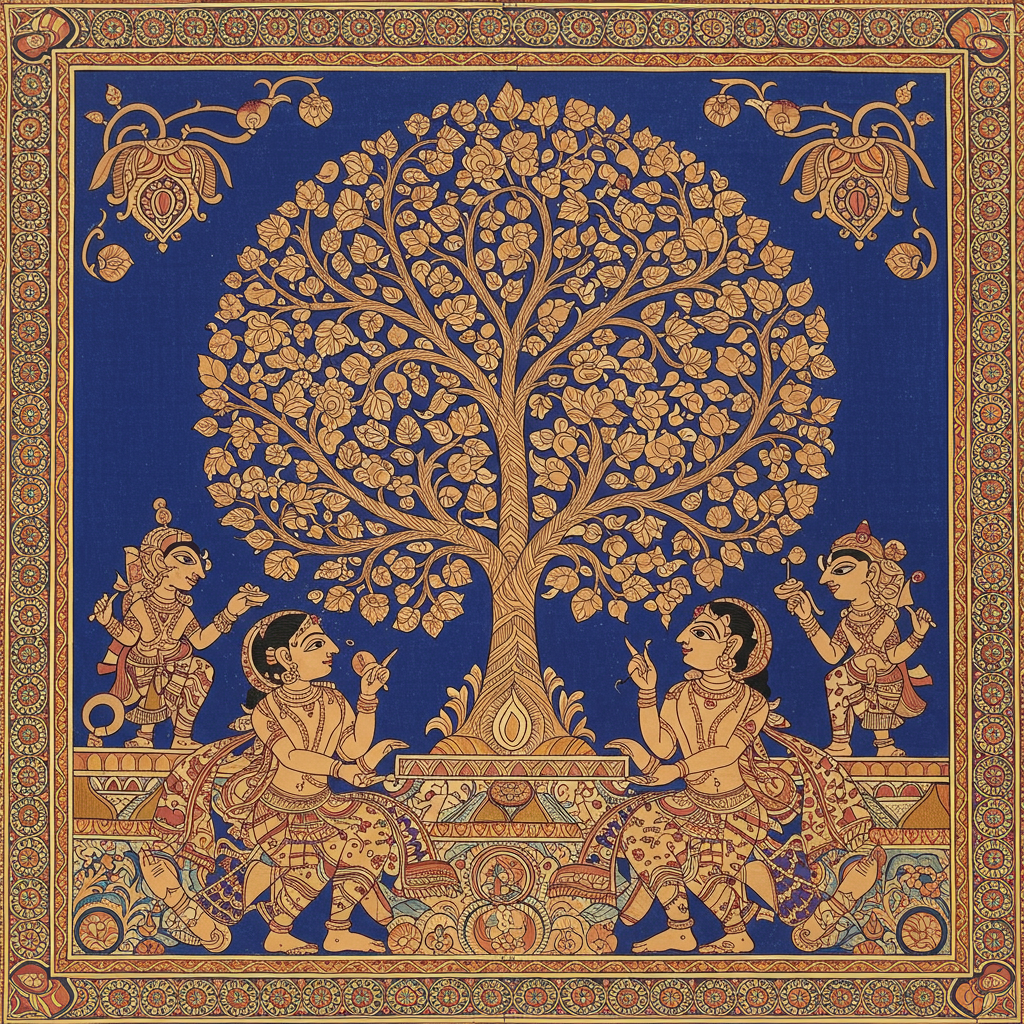
Experience the precision and narrative power of Kalamkari. It is an ancient ‘pen craft’ using natural dyes. Discover how its detailed process can enhance patience and mindful storytelling.
Each of these art forms offers a unique pathway to self-discovery and well-being. By engaging with them, you’re not just learning a skill. You are tapping into centuries of wisdom. You find your own rhythm. You nurture your inner self.
Ready to unearth the therapeutic heart of Indian folk art? Explore the links above to learn more about each tradition and how it can enrich your life.
 Indian Non-clinical ART THERAPY
Leave a comment