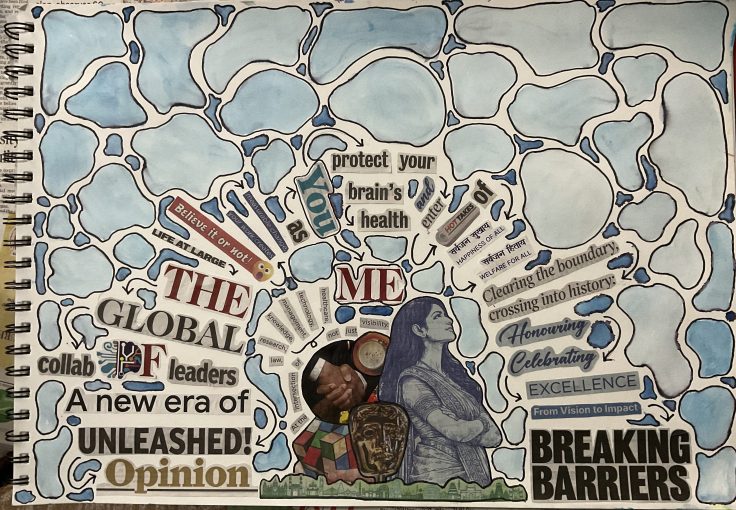
Today, I didn’t set out with a plan. I didn’t have a final “product” in mind or even a solidified idea. I simply had a three-size drawing book, today’s edition of the Times of India, and a rare gift: time. I wanted to start collage-making. I aimed to understand its effect on my mental health. I recorded my thoughts as they surfaced.
The Tug-of-War Between Being and Teaching
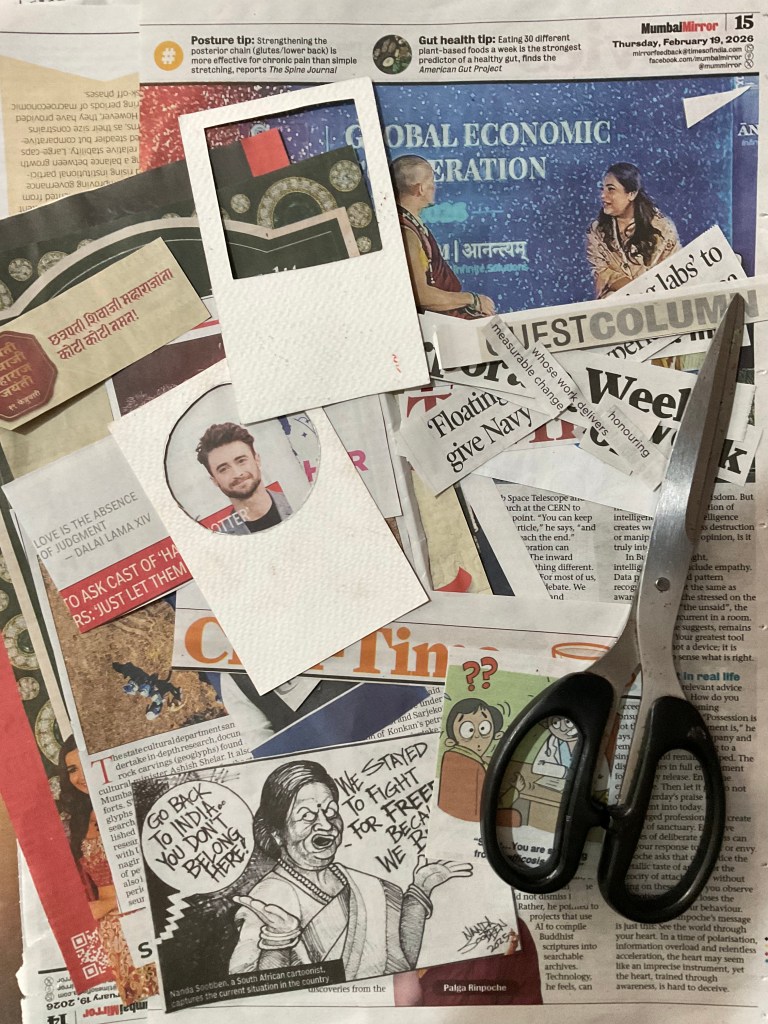
As I began, I felt a familiar ghost hovering over my shoulder: the Teacher. I used my handmade 5 cm viewfinders to find beauty in the chaos. My brain kept whispering, “Should I record this? How would I teach this technique to others?” I realized how often I rob myself of the “now” by trying to turn my learning into a lesson. Today, I fought back. I decided that this process was for me, and me alone.
Filtering the Noise
The newspaper is a chaotic reflection of the world, but I found my hands acting as a filter. I felt a visceral push-back against “negative” energy. Headlines about legal battles or heavy family disputes were “non-energy deserving.” Instead, I gravitated toward progress: India’s AI integration, the “Empower Her” awards, and the preservation of Konkan petroglyphs.
I struggled with the “logic” of the double-sided page. If I cut something from the front, I lose the back. It felt like a metaphor for life’s choices: to gain one perspective, you must sometimes let go of another. Eventually, I stopped overthinking and just cut.
Finding the “Me” in “You”
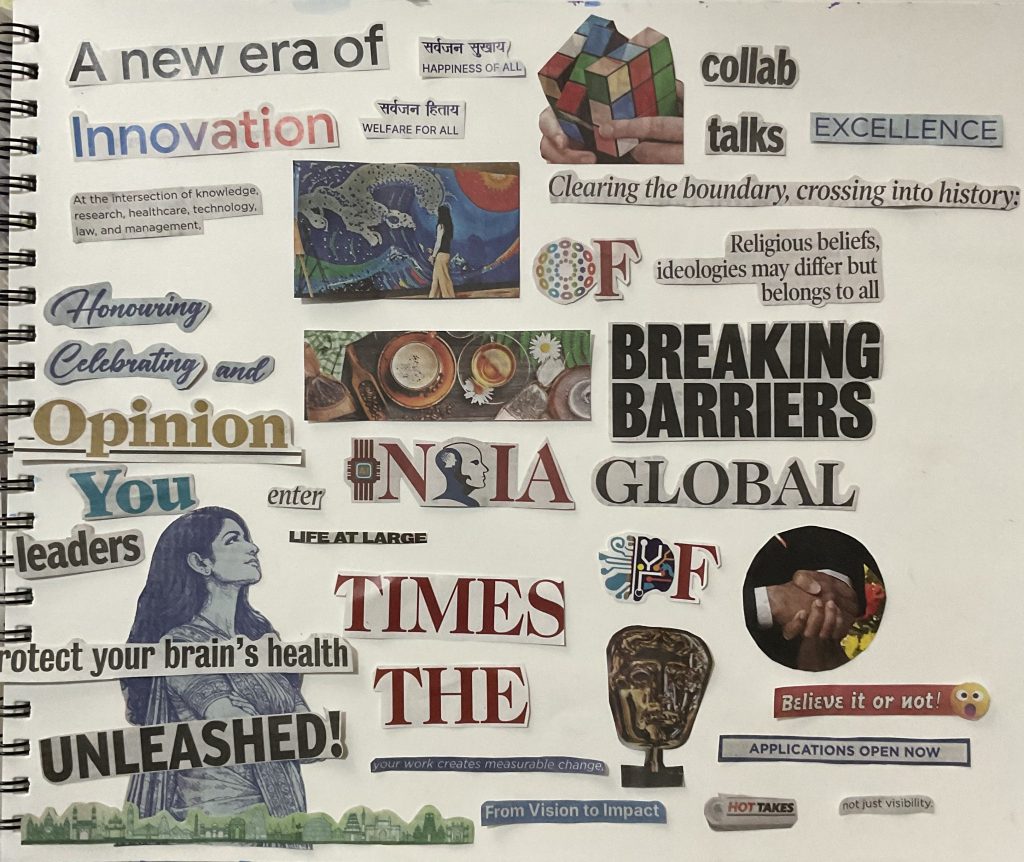
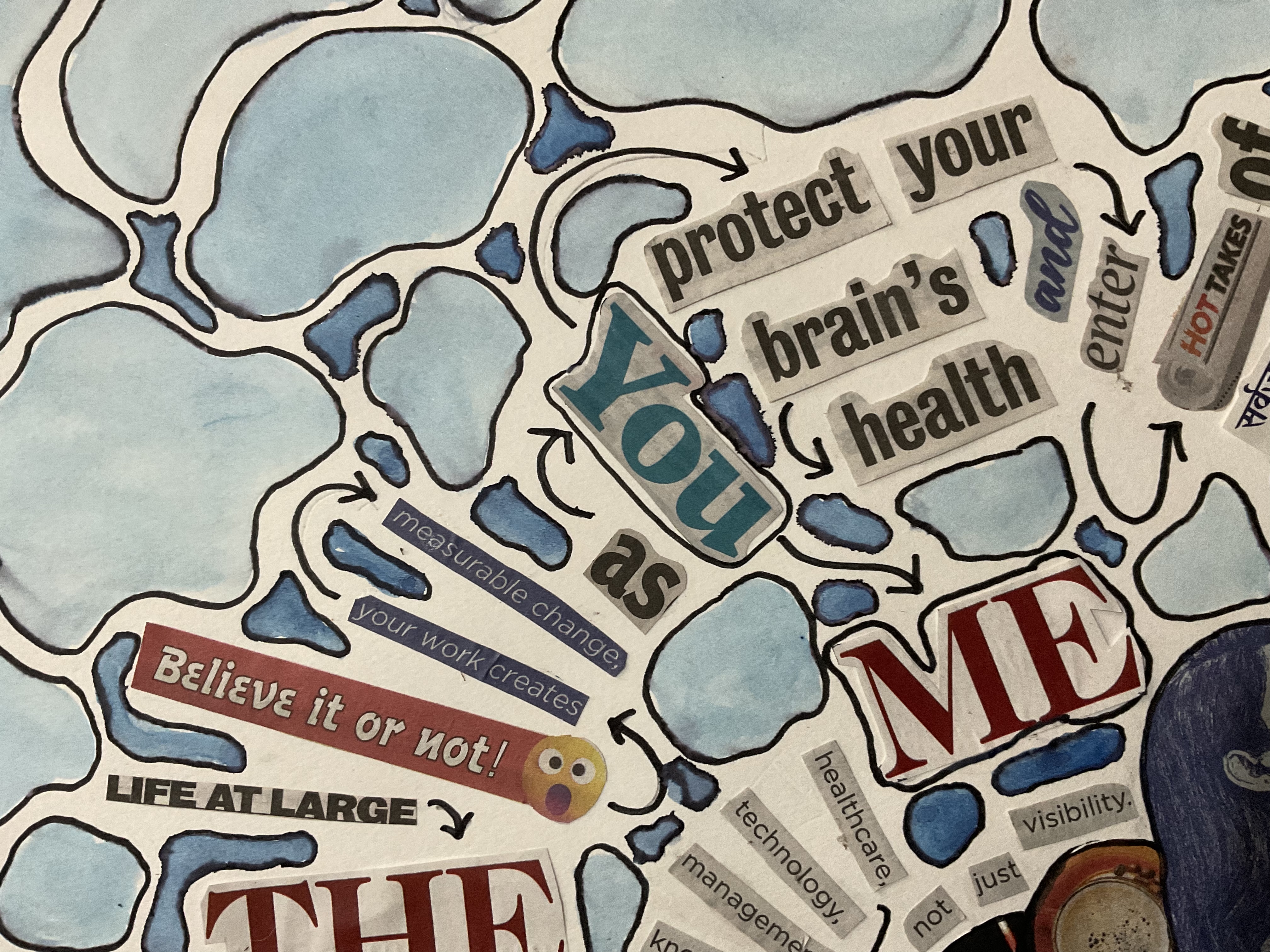
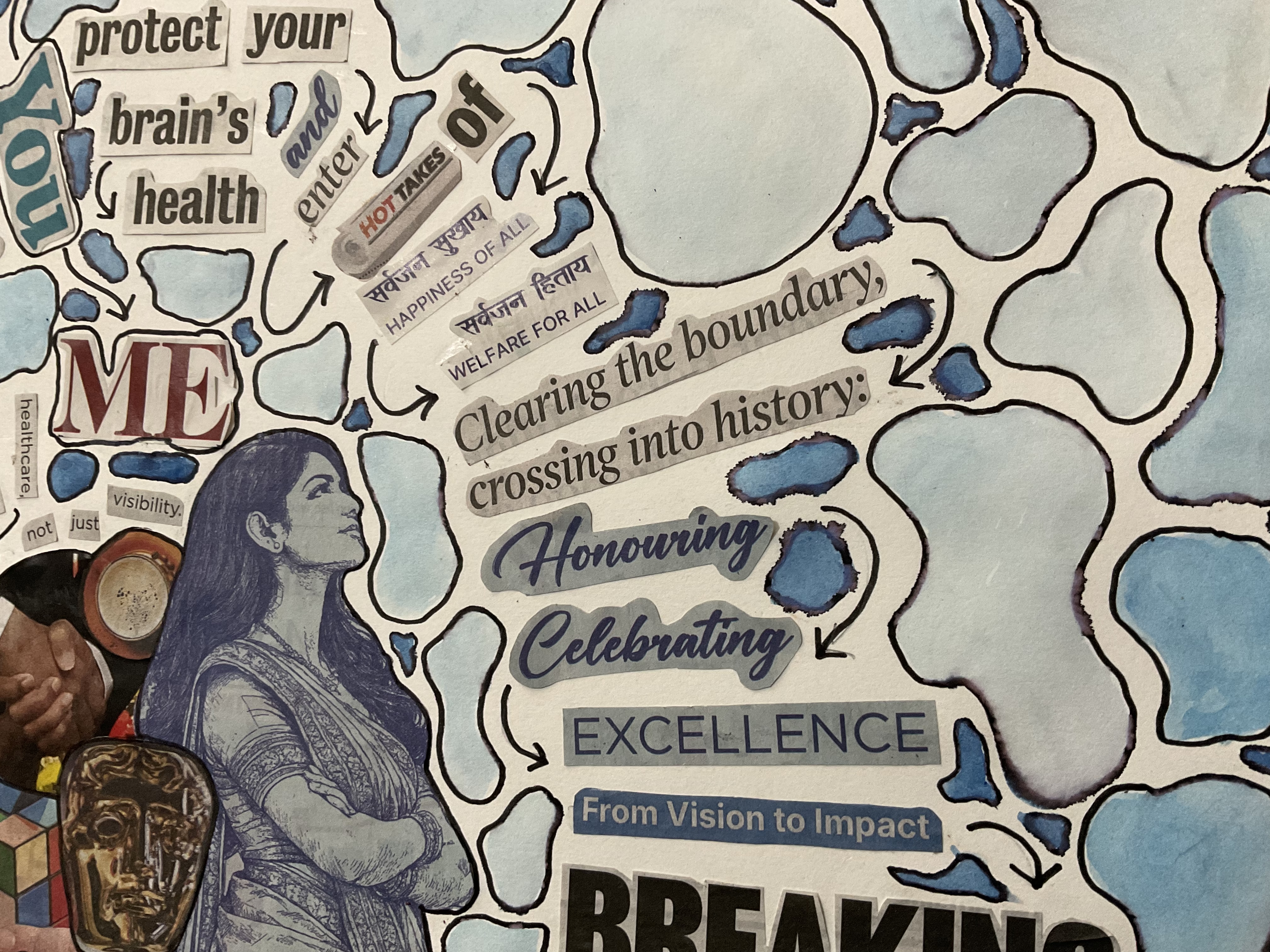
The most profound moment came from a simple word: YOU. The newspaper printed it to address the masses, but as I framed it in my viewfinder, it shifted. The “You” became “Me.” It was an invitation to look inward. It echoed a spiritual headline I found later. This headline was about how true power lies in the human capacity to look within.
From Gossip to Aesthetics
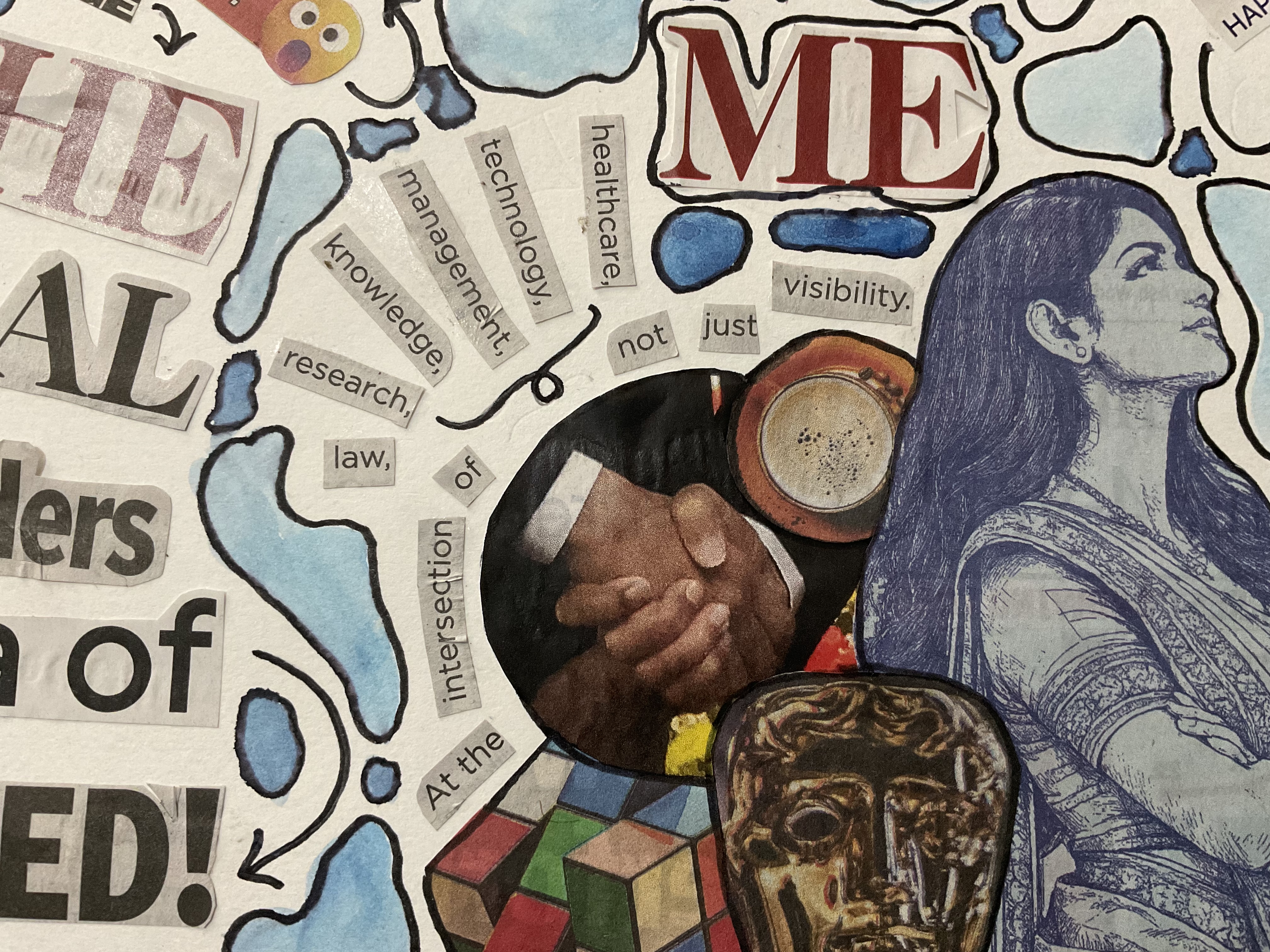
As I moved into the Bombay Times and Mirror, the energy shifted from “world news” to pure aesthetics. I found myself drawn to the traditional—Dr. Usha Balakrishnan’s Metal and a Memory—and the modern, like the “Unwind” pages. I even snagged a picture of Twinkle Khanna just for the “vibe” of her jewelry. It captured that quiet moment with a cup. I felt a small pang of “mother-guilt.” I cut something I knew my daughter would love. However, I chose to keep it for my own process.
The Sunrise of Intent
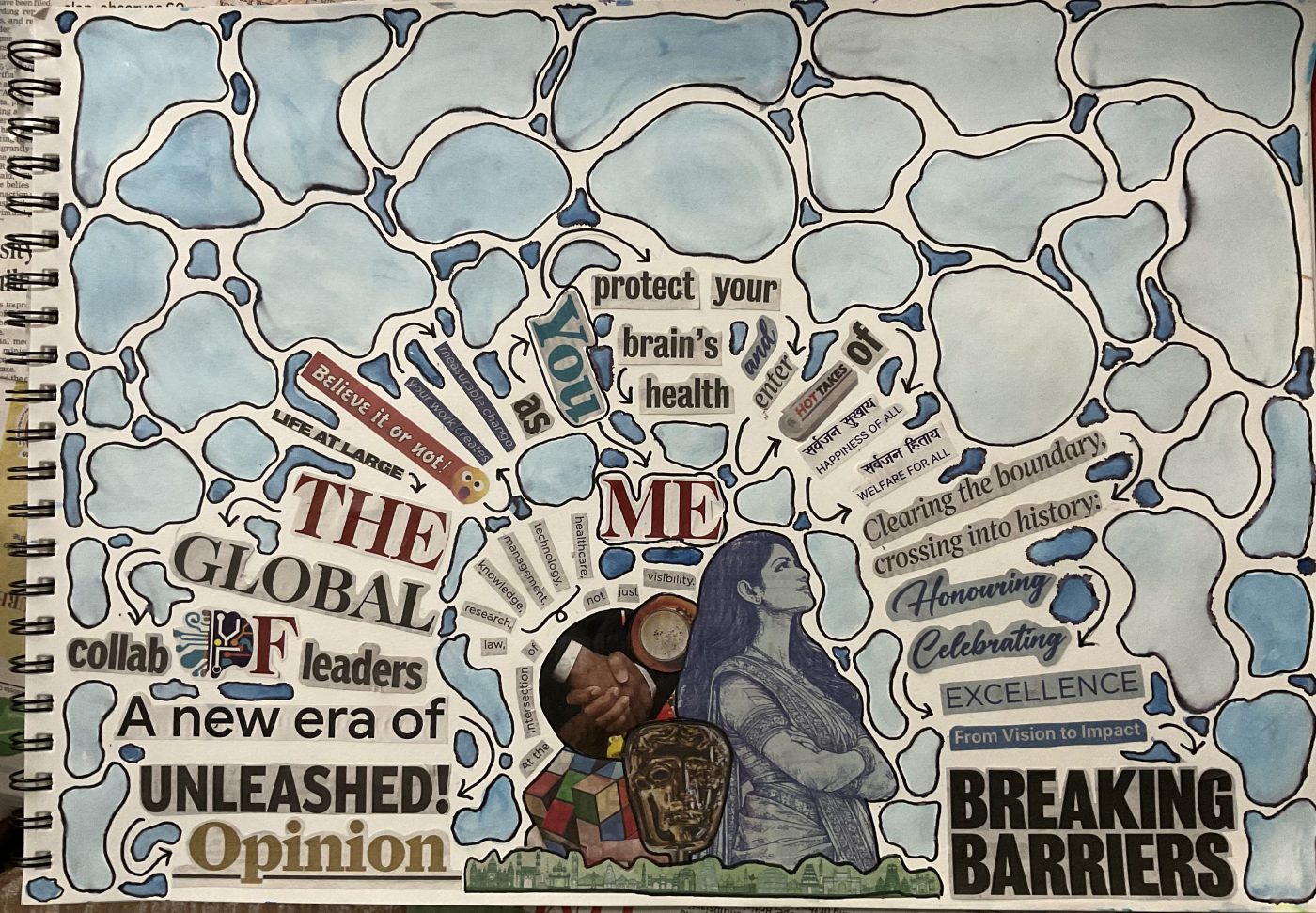
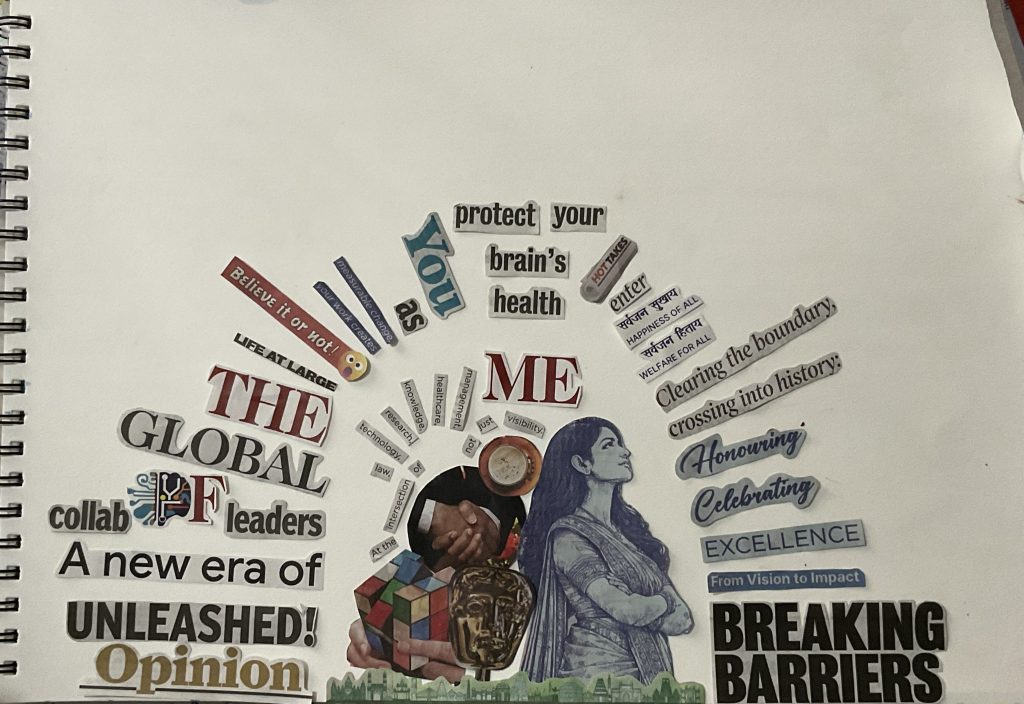
The second half of my journey was an exercise in “filtering.” With a mountain of clippings, I looked for the threads that connected them. I must have tried at least ten different arrangements before settling on a Sunrise Template. By placing the core of my identity—healthcare, research, and the “Me”—at the center, my aspirations radiated outward.
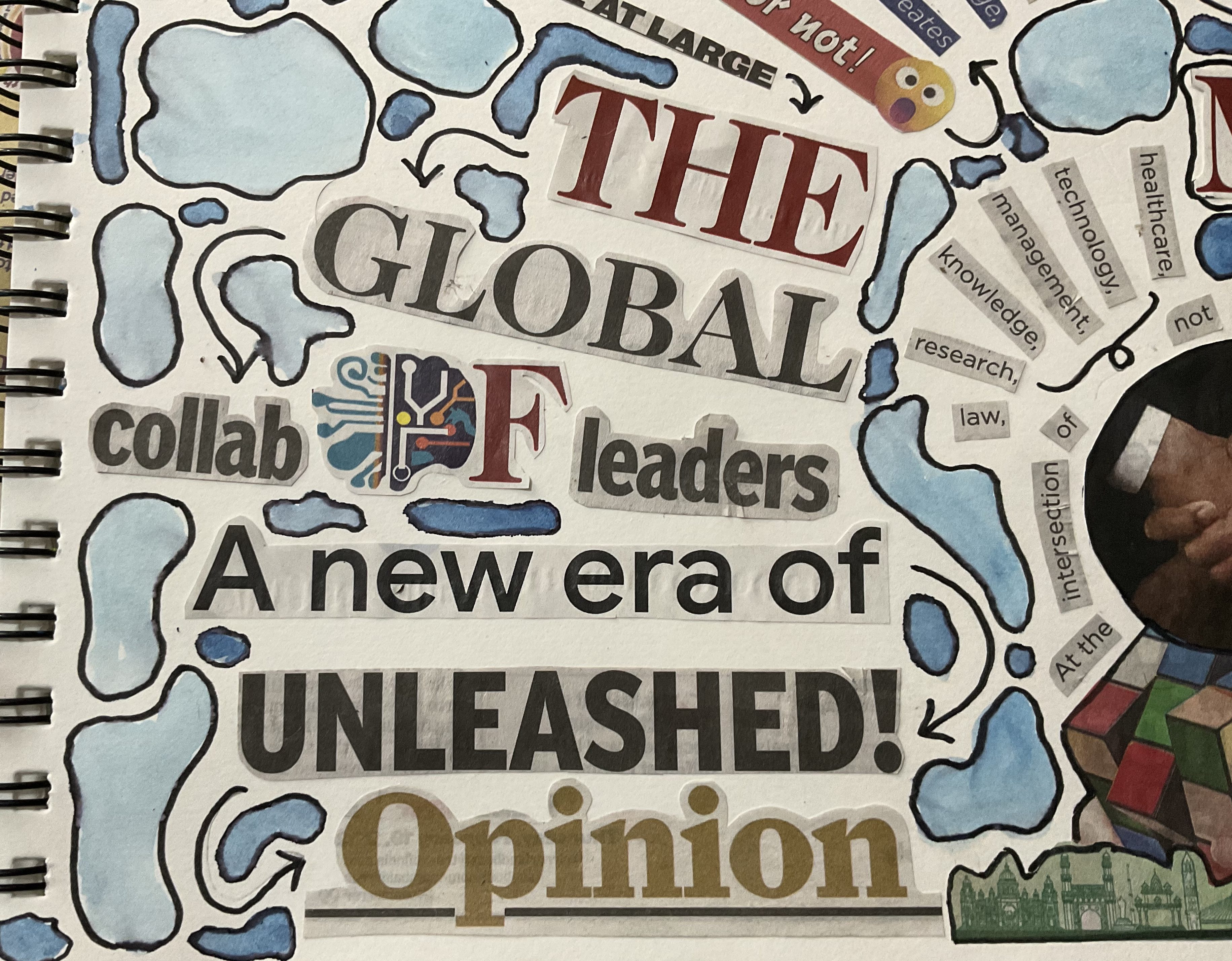
I gave little arrows to show how the arrangement moves to finish a statement that makes sense. In the empty space, I added organic shapes. I filled them with a translucent Indigo. This is a color that feels deep and calm. It grounds bold statements like “A New Era of Unleashed Opinion.”
The Alchemy of Paper: Bridging Art Therapy & Modern Psychology
As a practitioner in Nonclinical Art Therapy, I often see a fascinating process. The simple act of tearing and pasting can bypass the “logical guardrails” of the brain. This activity was a living example of how we can use external materials to reorganize our internal world.
The Art Therapy Lens: Direct Expression
In Art Therapy, collage is a unique modality because it offers pre-made imagery. For someone who often feels the weight of mentoring, starting with a blank canvas can trigger the inner critic. Collage removes that barrier; I didn’t have to draw “Innovation”—I just had to find it. This is the “Found Object” principle, where materials act as a catalyst for subconscious thoughts.
Modern Psychology: Cognitive Restructuring
Modern psychology, specifically Cognitive Behavioral Theory, speaks to how we can change our emotional state by changing our thought patterns. My process of “filtering” out negative news was a form of Visual Cognitive Restructuring. I was physically selecting a new narrative for my brain to process, effectively “protecting my brain’s health.”
The Power of Integration: The “Me” in the Center
The most significant psychological shift happened at the center of my A3 page. By placing the word “ME”alongside images of knowledge, research, and law, I was performing an act of Identity Integration. In psychological terms, this is about Self-Efficacy—the belief in one’s ability to succeed. Seeing those words physically connected by my hand reinforces the neural pathways associated with my professional goals for INCAT.
Final Reflection: A Mind Unleashed
The indigo shapes I painted weren’t just filler; they were the “Holding Environment.” In therapy, this is the safe space for exploring bold ideas. Sometimes these ideas can be scary, like “Breaking Barriers.” By containing my “Unleashed Opinions” within these soft, translucent borders, I made my ambitions feel attainable. This journey through the morning newspaper taught me a valuable lesson. The world is full of “news,” but we have the power to curate our own “Inner Headline.”
 Indian Non-clinical ART THERAPY
The concept is so simple but so relaxing and engaging to feel very positive.
LikeLiked by 1 person
It is a scientifically Proven activity used for mental health care and brain development.
LikeLike