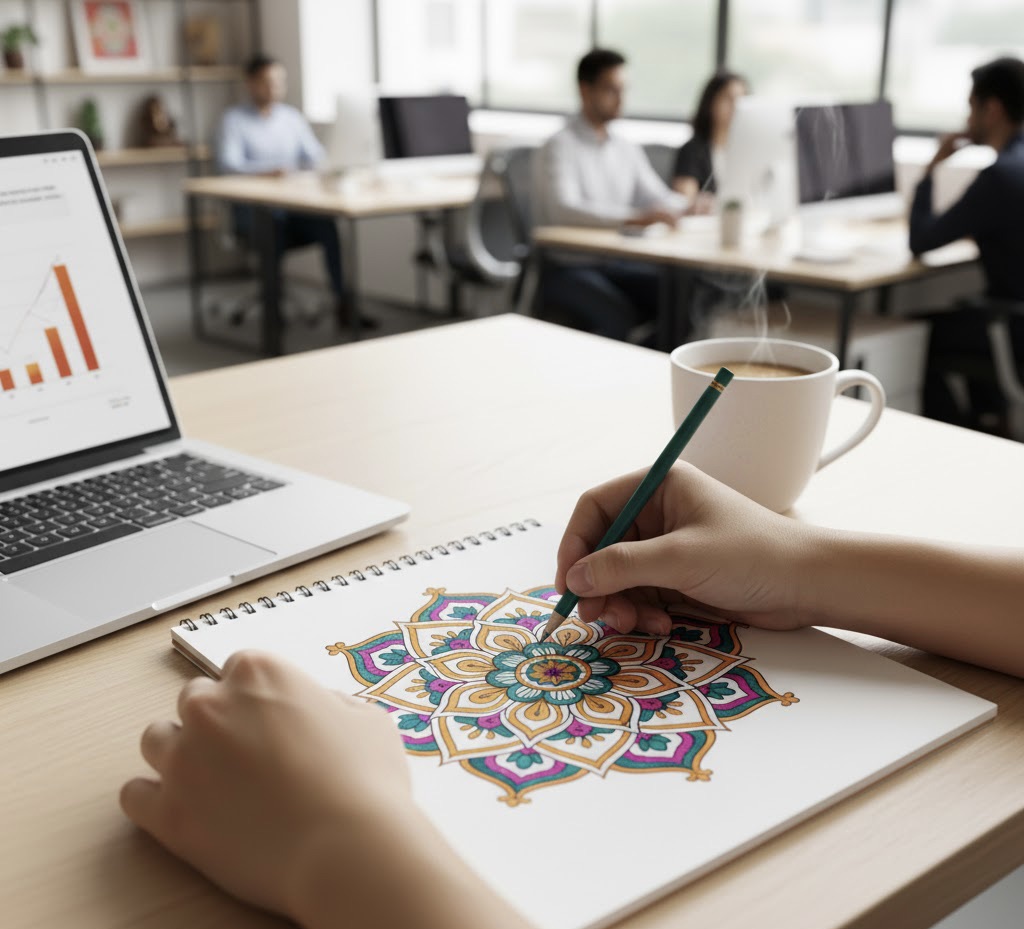
In the buzzing lobby of corporate India, EMPLOYEE WELLNESS is the new mantra. Organisations and companies are investing billions of rupees in the program. Right from gym membership to mental health apps. All of these are in a bid to create a healthier, happier and even more productive workforce. 1
Yet, despite this tracking spending, a frustrating paradox remains: still the engagement is critically low, the burnout is increasing and the unexpected promising returns on well-being still remains an exclusive luxury. 2
What is not working?
The truth is, the conventional, Western-centric model of corporate wellness is fundamentally misaligned with the Indian workplace. It is like a square peg in a round hole of a system that ignores the deep-seated, cultural pervasive stigma that is preventing employees from truly engaging in the programs for which the company is spending out of ordinary. 4
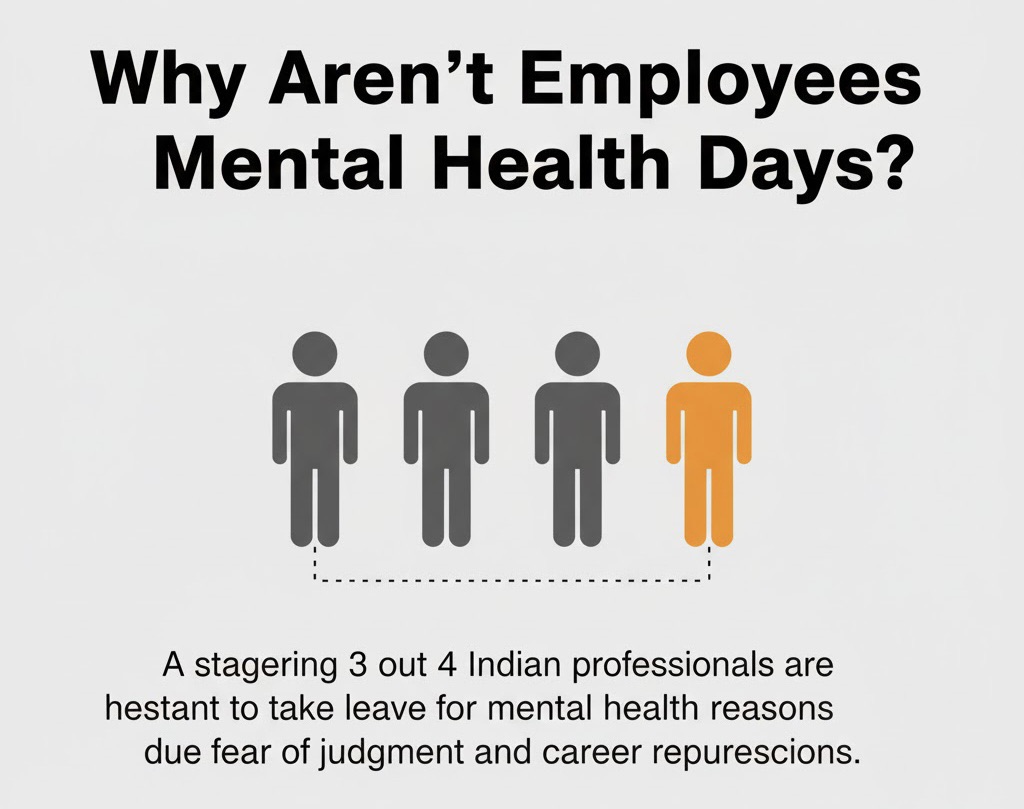
Research report shows that three in four Indian professionals hesitate to take a leave for mental health reasons. The fear is judgement and career repercussions. 6
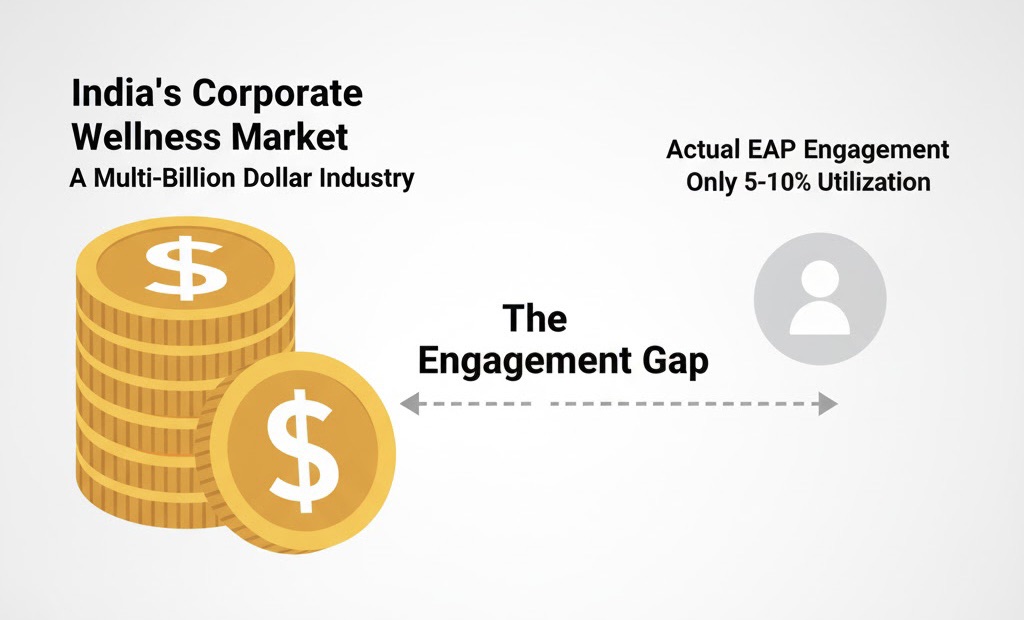
The Employee Assistance Programs (EAPs) started by the companies as the the cornerstone of most mental health initiatives, see utilization rates as low as 5-10%. 8
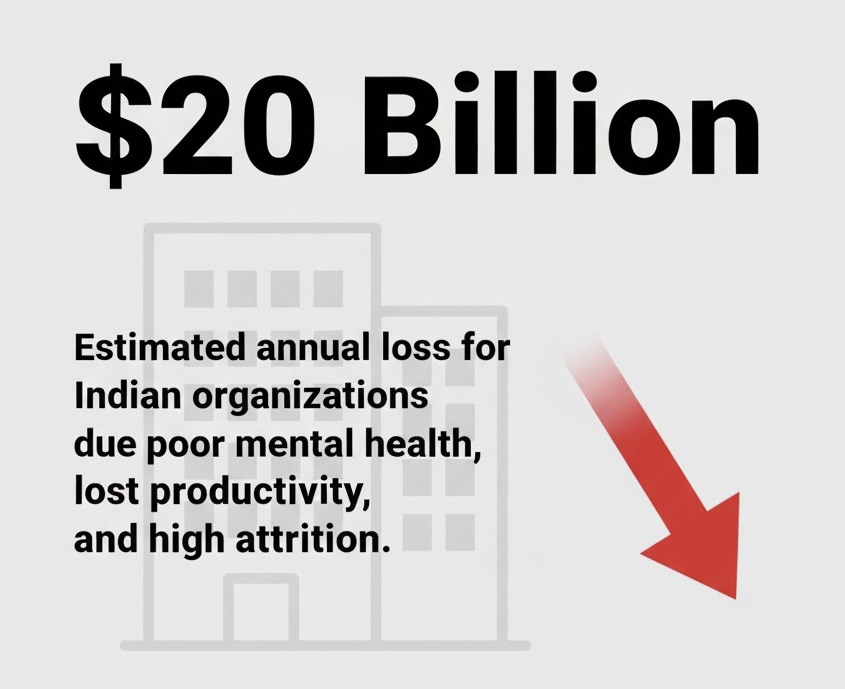
Apart from being a failure of engagement, it is a significant dream costing, companies billions annually in high attrition and lost productivity. 9
It’s time for a new blueprint. The one that is not imported from western unmatched culture, but from our own soil. A solution which is accessible, affordable and that deeply resonates with Indian ethos. Finally, a democratic solution made for the people, by the people and is of the people. The future of corporate wellness lies in a powerful synthesis of two potent tools: the expressive freedom of non-clinical art therapy and the timeless wisdom of Indian philosophy.
Moving Beyond Words: The Power of Creative Expression
Even today, the greatest barrier that is attached to mental wellness in corporate India is the stigma of verbal disclosure. 8 Somehow we are conditioned to maintain a brave face where we can feel proud about admitting that we are struggling and can feel like a professional liability.
This is where non-clinical art therapy offers a revolutionary alternative.
Before we move further, let me promise that this is not about creating masterpieces. It is about providing or non-verbal outlet for expression which feels safer than the verbal talks and disclosures. Unlike clinical therapy, which focuses on diagnosis and treatment, this approach is centered on personal growth, stress relief, and self-exploration in a relaxed, non-judgmental setting. 11
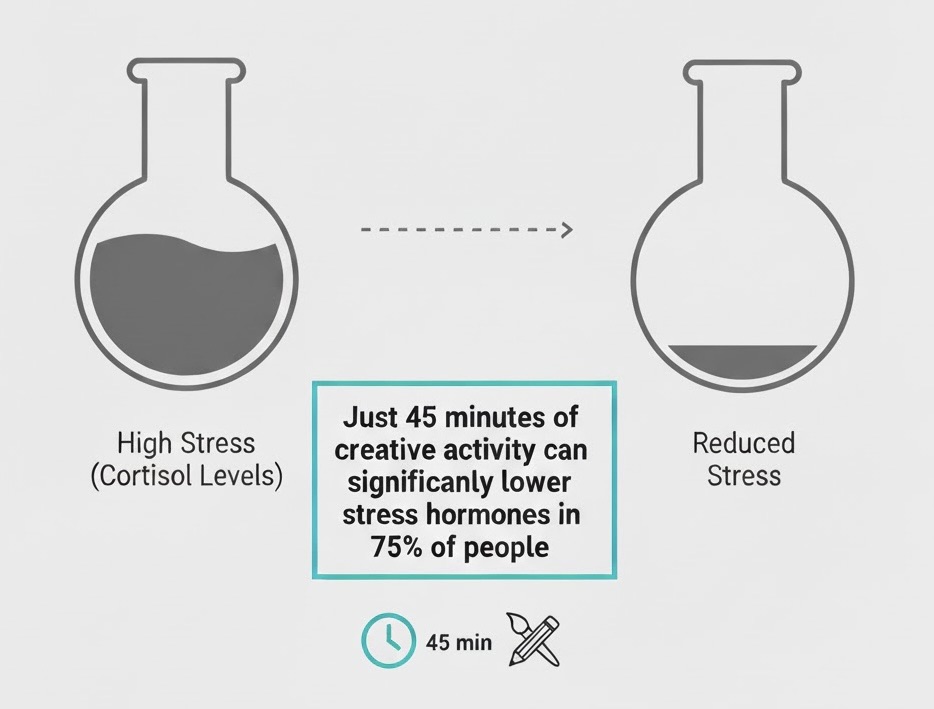
The science is compelling. Engaging in just 45 minutes of art-making has been shown to significantly reduce cortisol, the body’s primary stress hormone. 12 The creative process can induce a “deep flow state,” which is not only restorative for the brain but also a powerful catalyst for innovation and problem-solving. 13 By providing a non-verbal channel to process complex emotions, it bypasses the stigma and offers a psychologically safe way for employees to manage stress, right at their desks. 14
Rooted in Wisdom: Aligning Wellness with Indian Ethos
Let us make this even better. To begin with, this approach is not a foreign concept. It is a modern application of principles that are woven into the timeless ancient fabric of Indian Knowledge Systems (IKS). 15
- A Holistic Vision: IKS, rooted in traditions like Yoga and Vedanta, has always promoted a holistic view of well-being—an integration of mind, body, and spirit. Art therapy mirrors this by engaging the mind-body connection in a powerful, tangible way.
- Focus on Process, Not Outcome (Karma Yoga): The principle of dedicating oneself to action without attachment to the results is a powerful antidote to performance anxiety. Non-clinical art therapy embodies this perfectly. The value is in the meditative act of creation, not the final product, freeing individuals from the fear of judgment.
- Timeless Fables for Modern Problems: Ancient texts like the Panchatantra were originally created as a guide to wise conduct and leadership (niti shastra). These fables offer a brilliant, non-confrontational framework to discuss complex workplace dynamics. A story about team conflict between a “Lion and a Bull” becomes a safe allegory to explore office politics and rebuild trust, without pointing fingers. 16
The Path to a Resilient, Creative, and Connected Workforce
Imagine a workplace where employees are equipped with simple, creative tools to manage stress in real-time.Where teams build cohesion not through forced off-sites, but through collaborative art projects that foster genuine connection. 18 Where leaders can address sensitive issues using the shared cultural language of ancient fables.
This is not a distant dream. It is a practical, affordable, and profoundly effective strategy to build the resilient, innovative, and deeply engaged workforce that every organization strives for. It’s about moving beyond the wellness paradox and creating a culture where employees don’t just survive, but truly thrive.
In the posts to come, we will delve deeper into the specific art therapy activities, explore more fables from the Panchatantra, and provide a practical toolkit for HR leaders looking to pioneer a new era of corporate wellness in India.
Ready to build a more resilient and creative team? Explore our programmes to see how we can tailor a solution for your organization.
Follow Linked in for regular updates and to connect
 Indian Non-clinical ART THERAPY