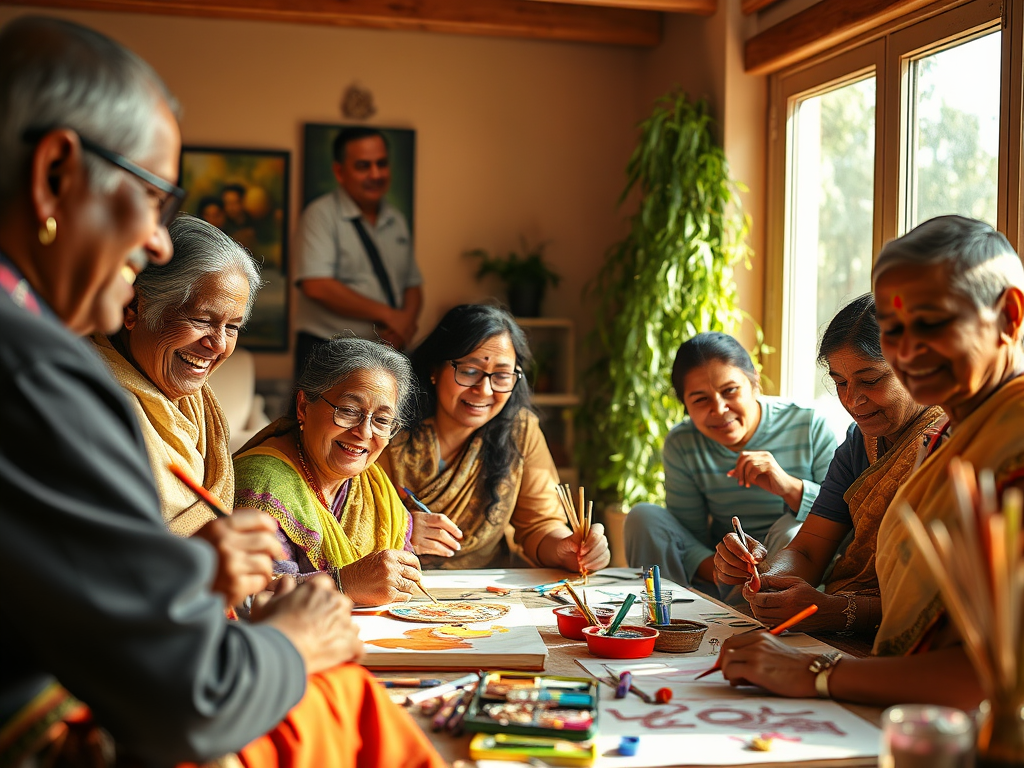
Do you feel a creative spark in you? If your answer is No, think back when you were a kid. The one freely expressing through scribbles, songs, stories ( even self made ones ). We all have a creative spark within us. Life often pushes us to focus on logic and reasoning as we grow. Gradually, we forget that playful, expressive part of ourselves. We loose the key to our inner artist.
But what if I told you that key can be a powerful tool for well-being. That key can help you navigate daily life with more ease and joy? That’s the promise of non-clinical Art Therapy.
What is Non-Clinical Art Therapy?
It’s Simpler Than You Think
Are you wondering, “Art Therapy? Do I need to be an artist?” The answer is a resounding no!
Non-clinical Art Therapy is about using art as a tool for self-expression, personal growth, and stress management. It’s a way to tap into your innate creativity to enhance your emotional well-being, regardless of your artistic skill level.
Unlike any other clinical therapy, this can be very well relayed on non verbal expression. You know, if you don’t feel like talking, just make Art. It is also different from clinical Art Therapy, which is practiced by trained therapists to tackle specific mental health conditions
Think of it this way:
Remember when you were stressed about a work project and doodled on a notepad during a meeting? Or when you felt overwhelmed and put on your favorite song and just let yourself move to the music? That’s non-clinical Art Therapy in action. It’s about engaging in a creative process for the sheer joy of it, and noticing how it makes you feel.
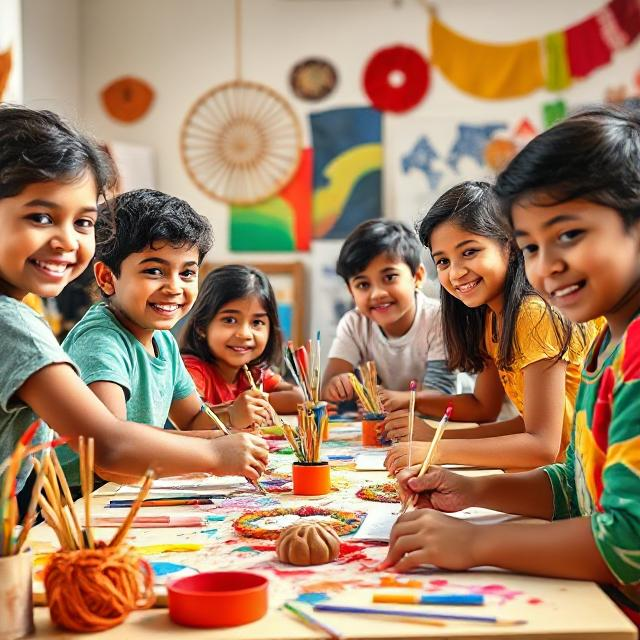
The Science and Soul of Art-Making
So, how does this work? Let’s break it down in a way that’s easy to understand, drawing on both scientific research and ancient wisdom:
- Your Brain on Art: When you create something, your brain releases dopamine. Dopamine is a neurotransmitter, a chemical linked to pleasure, motivation, and reward [1]. Studies have shown that engaging in art activates the reward pathway in the brain. This leads to increased feelings of well-being [2]. Art-making can also shift your brainwaves, promoting a state of calm focus, akin to meditation [3]. Just like how you kept on doing good things when your teacher praised you.
- Emotions and Expression: From a psychological point of view, engaging in art provides safe and non-verbal way to express emotions. Which can otherwise be difficult to put into words. As the saying goes, “A picture is worth a thousand words.” Visual art allows us to externalize complex feelings and experiences, making them more tangible and easier to process. Just like how it is easy for a kid to cry when it is hungry instead of putting in words.
- The Wisdom of the Ancients: Ancient Indian philosophies, like Vedanta, speaks that all things are interconnect. It explains how self-expression is important for achieving harmony and balance. Creative practices like Mandala, have been used for centuries in Hinduism & Buddhism. Its intricate patterns and meditative qualities, promotes a sense of wholeness and inner peace [4].
How to make art a Part of Your Day?
The beauty of non-clinical Art Therapy is that it can be easily integrated into your daily life. Here are some simple ways to get started:

- Journaling Your Journey: Instead of just writing your thoughts, try drawing, doodling, or pasting images into a journal. This can add a whole new dimension to your self-reflection.
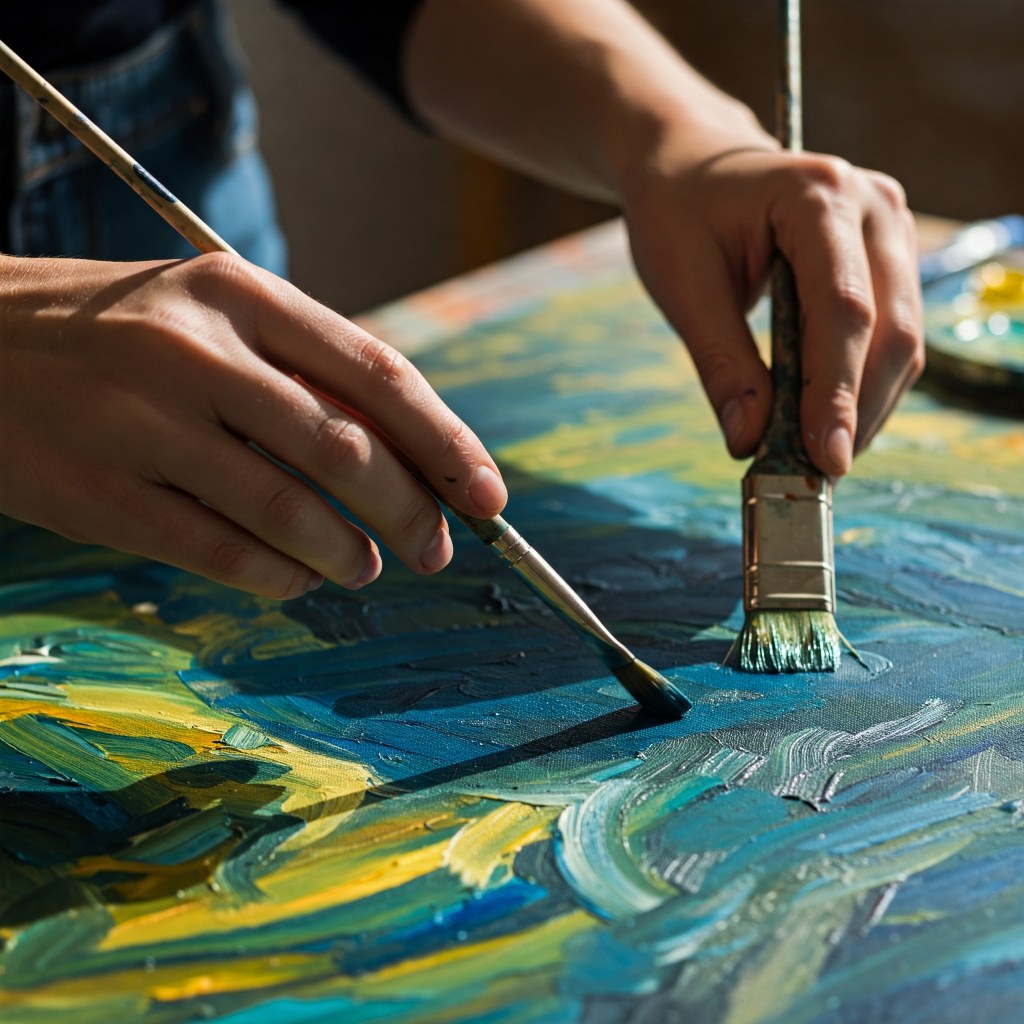
- Paint to the Music: Put on your favorite song and let your paint brush move as it wants to. Pay attention to how the music makes you feel and allow your body to express that.
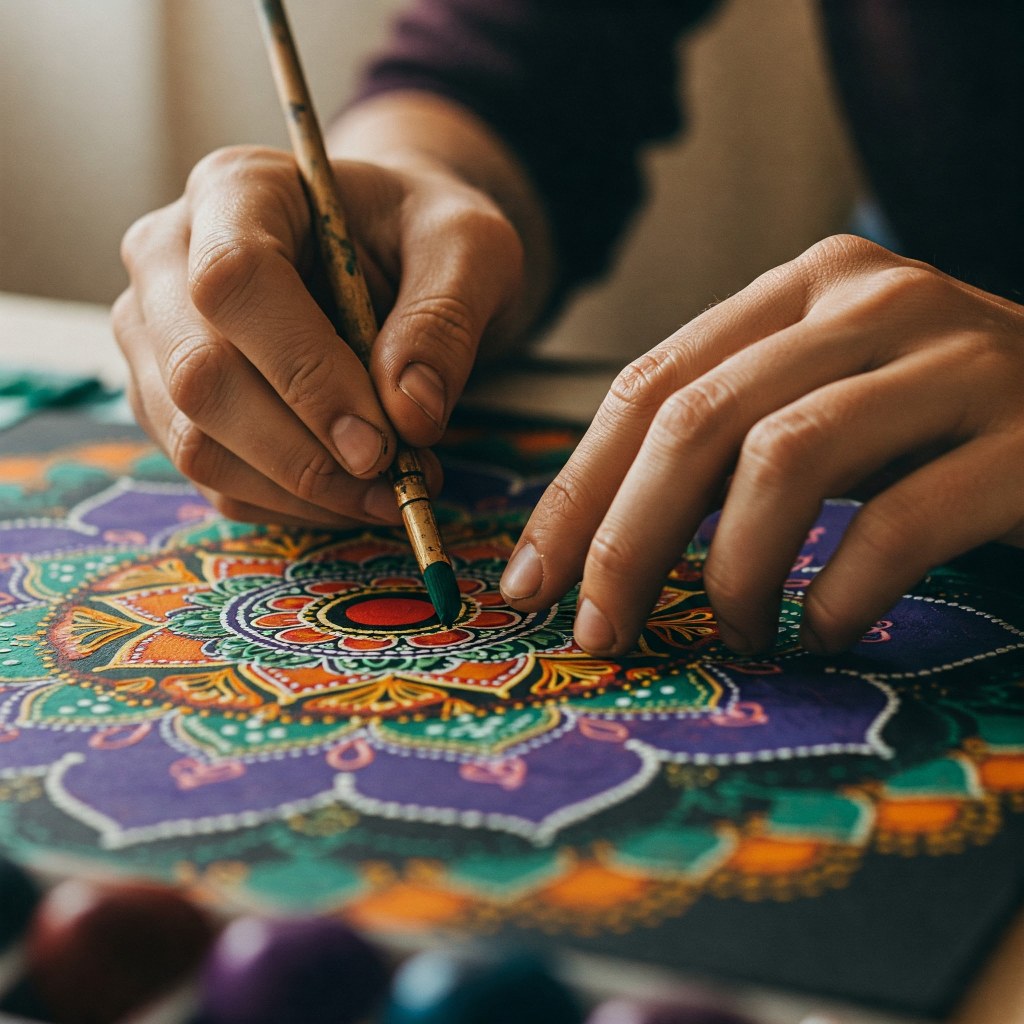
- Create a Mandala: Draw or color a Mandala. Focus on the repetitive patterns and the act of filling the space with color. Notice if your mind starts to quiet down.
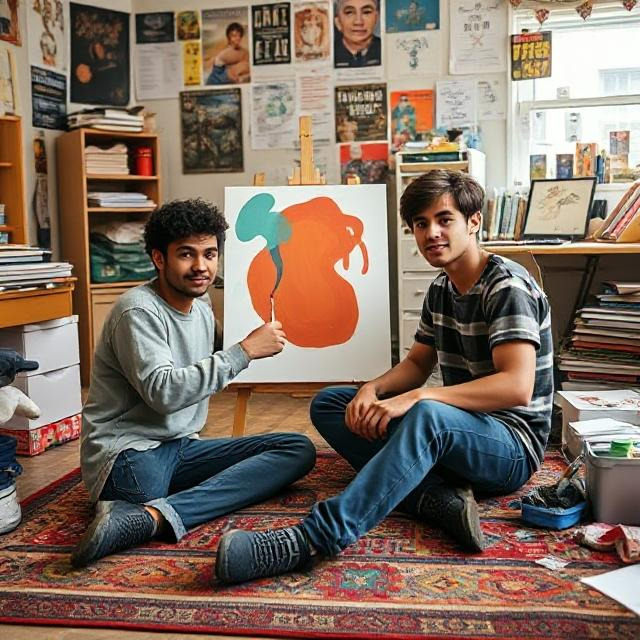
- Express Yourself with Color: Choose a few colors that show your current mood. Create an abstract painting or drawing using only those colors. Think about why you chose those particular hues.
A Call for Creative Well-being in Indian Workplaces
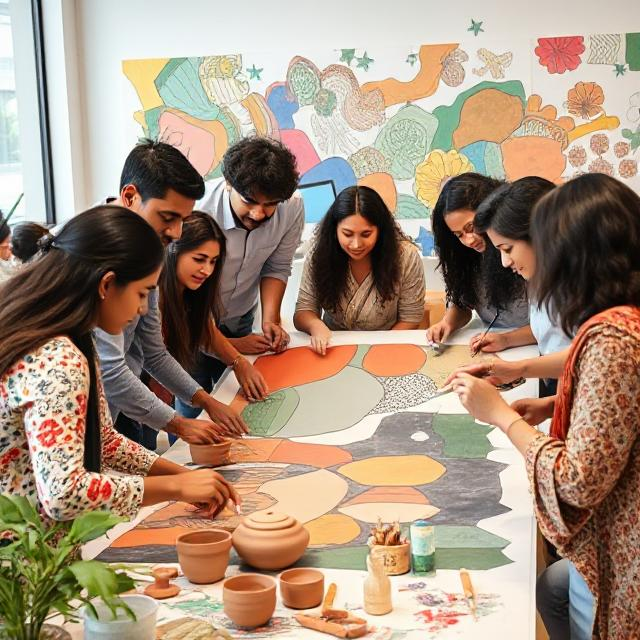
Progressive companies in India are beginning to recognize that employee well-being is not just a perk. But it is a crucial driver of productivity, engagement, and overall success. By incorporating non-clinical Art Therapy into workplace wellness programs, organizations can empower their employees to:
- Manage workplace stress: Offer creative outlets for employees to de-stress and find moments of calm during the workday. Studies have shown that even brief creative activities can significantly reduce stress levels [5].
- Enhance communication and collaboration: Shared art-making experiences can foster a sense of connection. Empathy and teamwork improves communication and collaboration within teams.
- Boost morale and job satisfaction: Employees feel supported in expressing themselves and exploring their creativity. They then are more to feel valued and engaged, leading to increased morale and job satisfaction.
- Unlock creative potential: Engaging in art-making can stimulate creative thinking and problem-solving skills. This contributes to a more innovative and dynamic work environment.
The Future of Well-being is Creative
Art is not just a hobby or a talent; it’s a fundamental part of what makes us human. By embracing non-clinical Art Therapy, we can tap into our innate creative potential. This enhances our well-being, navigate life’s challenges, and cultivate a deeper connection with ourselves and others. Whether you’re an individual seeking self-care strategies or a company looking to invest in your employees. The power of art awaits.
References
[1] Kaimal, G., Meersand, P. S., & Kuyken, W. (2021). Art therapy for chronic pain: A systematic review and meta-analysis. Chronic Illness, 17(1), 3-19.
[2] Gable, S. L., & Haidt, J. (2005). What (and why) is positive psychology? Review of general psychology, 9(2), 103-110.
[3] Siegel, D. J. (2010). Mindsight: The new science of personal transformation. Bantam Books.
[4] Kossak, M. (2015). Mindfulness-based art therapy: Theory and practice. John Wiley & Sons.
[5] Stuckey, H. L., & Nobel, J. (2010). The connection between art, healing, and public health: A review of current literature. American 1 journal of public health, 2 100(2), 254-263.
 Indian Non-clinical ART THERAPY
Very nice and simply explained..
Looking forward for more such
LikeLiked by 2 people
A beautifully articulated piece that gently reminds us of the healing power of creativity. The simplicity and depth with which non-clinical art therapy is explained is truly inspiring.
LikeLiked by 1 person
Thank you for you motivating feedback
LikeLike